In the high-stakes world of automotive engineering, torque vectoring has emerged as the unsung hero of cornering precision. This sophisticated technology, once reserved for elite supercars, is now trickling down to performance-oriented mainstream vehicles, rewriting the rules of how cars interact with the road.
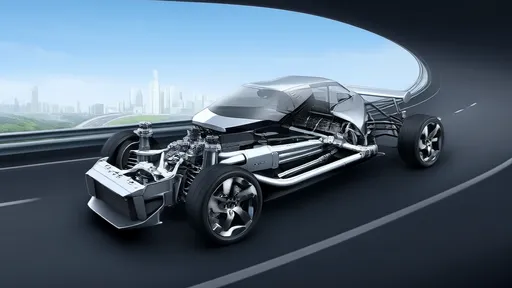
The physics-defying elegance of torque vectoring lies in its ability to distribute power not just between axles, but individually to each wheel with millisecond precision. Unlike traditional limited-slip differentials that simply manage wheel slip, torque vectoring systems actively calculate the optimal torque distribution for any given corner, speed, or road condition. The result? A car that seems to pivot around corners with almost supernatural composure.
Modern implementations use a combination of braking intervention and electronic differential control to achieve this effect. When entering a corner, the system subtly brakes the inner wheel while simultaneously increasing power to the outer wheel. This creates a yaw moment that helps rotate the car into the turn with minimal steering input. The effect is so pronounced that test drivers often report feeling like the car is "reading their mind" through sweeping bends.
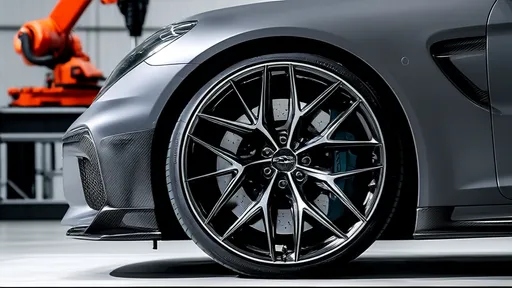
Porsche's Torque Vectoring Plus system takes this concept further by incorporating rear-wheel steering on models like the 911 and Taycan. The combination creates what engineers call "virtual shortened wheelbase" effect during low-speed maneuvers while maintaining stability at high speeds. This dual personality allows sports cars to feel both agile in city driving and planted on the autobahn.
What makes torque vectoring particularly fascinating is its adaptive learning capability. Modern systems don't just follow pre-programmed maps - they continuously analyze driver behavior, road surfaces, and even subtle weight transfers to optimize performance. After several laps on a track, a good torque vectoring system can actually anticipate the driver's preferred line and help maintain it with progressively less intervention.
The technology isn't without its controversies. Purists argue that torque vectoring creates an artificial driving experience, insulating drivers from the raw feedback that defined classic sports cars. Engineering teams counter that modern systems are designed to enhance rather than replace mechanical grip, working in harmony with suspension geometry and tire technology.
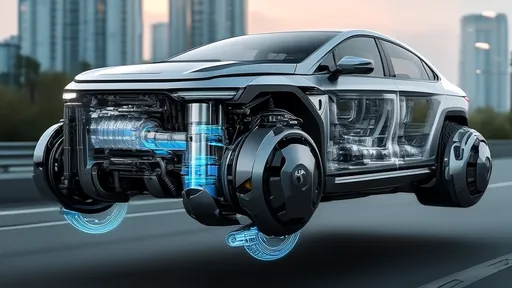
As electric vehicles dominate product roadmaps, torque vectoring is poised for a revolution. With independent motors at each wheel, EVs can implement torque vectoring without the complexity of mechanical differentials or brake-based systems. The forthcoming Audi RS e-tron GT, for instance, promises millisecond-level torque adjustments that could make conventional stability systems obsolete.
Perhaps the most impressive aspect of torque vectoring is its stealth operation. Unlike dramatic spoilers or roaring exhausts, this technology works its magic invisibly. Most drivers will never know it's there until they experience that surreal moment when their car corners like it's on rails while competitors struggle with understeer. In the quest for perfect handling, torque vectoring has become automotive engineering's best-kept secret.
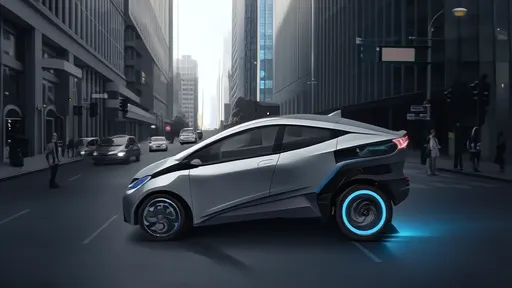
The future of the technology points toward integration with autonomous systems. Imagine a self-driving car that doesn't just navigate turns safely, but does so with the precision and grace of a professional racing driver. As sensor suites become more sophisticated, torque vectoring systems will likely incorporate real-time road surface analysis and predictive algorithms for preemptive adjustments.
From the winding roads of the Alps to the banked curves of the Nürburgring, torque vectoring is quietly redefining the limits of automotive performance. As the technology becomes more accessible, we're witnessing a democratization of handling prowess that would have been unimaginable a decade ago. The next time your car takes a corner with uncanny precision, you'll know there's some brilliant engineering at work behind the scenes.
By /Jun 14, 2025
By /Jun 14, 2025
By /Jun 14, 2025
By /Jun 14, 2025
By /Jun 14, 2025

By /Jun 14, 2025
By /Jun 14, 2025

By /Jun 14, 2025
By /Jun 14, 2025
By /Jun 14, 2025
By /Jun 14, 2025

By /Jun 14, 2025
By /Jun 14, 2025
By /Jun 14, 2025
By /Jun 14, 2025
By /Jun 14, 2025
By /Jun 14, 2025
