The automotive industry is undergoing a quiet revolution in design methodology, where the cold precision of algorithms meets the warm creativity of human designers. Nowhere is this more evident than in the emerging field of parametric front grille design, where computational processes are generating forms that would be nearly impossible to conceive through traditional sketching methods.
At the heart of this transformation lies a fundamental shift in how we approach automotive aesthetics. Parametric design doesn't simply create variations on existing themes—it generates entirely new design languages based on mathematical relationships and performance parameters. The front grille, that most iconic of automotive facial features, has become the perfect testing ground for this computational approach to form-making.
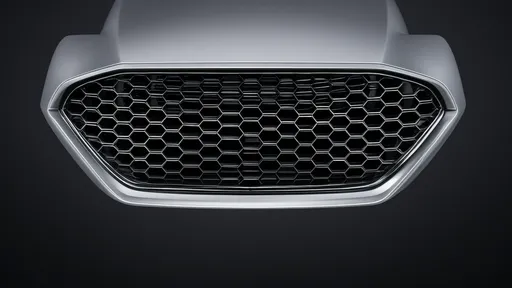
Modern parametric grilles bear little resemblance to their manually-designed predecessors. Where traditional grilles followed relatively simple patterns of horizontal or vertical bars, algorithmically-generated versions exhibit complex, organic geometries that respond to multiple functional requirements simultaneously. These might include optimal airflow for cooling, pedestrian safety considerations, and even aerodynamic performance—all while maintaining distinctive brand identity.
The process typically begins with designers establishing a set of parameters and constraints. These might include the grille's overall dimensions, required airflow volumes, material thicknesses, and stylistic preferences. Advanced algorithms then explore the vast design space within these boundaries, generating thousands of potential solutions that human designers would never have the time or capacity to conceive manually.
What's particularly fascinating is how these computational methods are producing forms that feel strangely alive. The intricate patterns often resemble biological structures—honeycomb networks, leaf venation systems, or coral formations. There's an inherent logic to these shapes that the human eye instinctively recognizes as functional, even when the exact purpose isn't immediately apparent.
Manufacturing these complex geometries would have been impossible just a decade ago. The rise of advanced 3D printing technologies and new molding techniques has allowed automakers to translate these digital creations into physical reality. Some premium brands are now producing grilles with hundreds of unique, interlocking components that would be economically unfeasible to produce using conventional methods.
The implications extend far beyond aesthetics. Parametric grille designs are proving to be unexpectedly effective at solving longstanding engineering challenges. The optimized airflow patterns reduce drag while improving cooling efficiency. Some configurations even help manage noise by breaking up turbulent air in specific ways. These performance benefits are causing even traditionally conservative manufacturers to take notice.
Perhaps most surprisingly, algorithmic design hasn't resulted in a homogenization of automotive faces as some feared. Instead, by encoding brand DNA into the generative parameters—whether that's BMW's kidney grille proportions or Audi's hexagonal themes—designers are finding that computational methods can produce variations that feel both innovative and unmistakably on-brand.
The human designer's role hasn't diminished in this process; it's evolved. Rather than manually sketching iterations, designers now curate algorithmic outputs, guiding the computational process toward aesthetically pleasing and functionally superior solutions. It's becoming a dialogue between human intuition and machine intelligence, with each informing and improving the other.
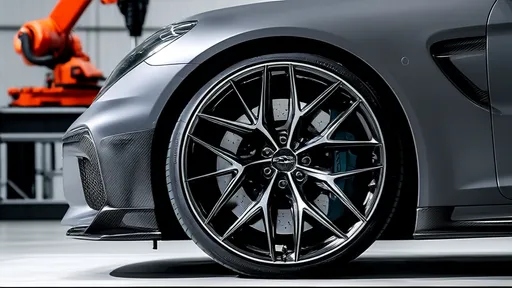
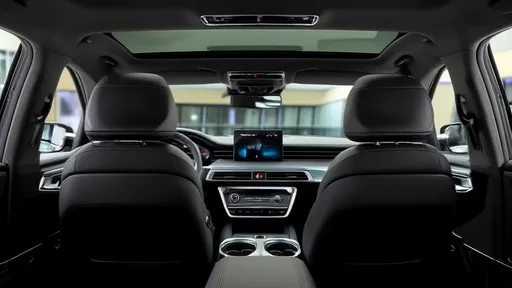
Looking ahead, we're likely to see parametric design principles extend beyond the grille to other vehicle components. Headlight clusters, wheel designs, and even interior elements are already being explored through similar computational methods. The front grille has simply been the most visible early adopter of this transformative approach.
As the technology matures, we may reach a point where each vehicle's grille is uniquely optimized for its specific configuration—engine type, cooling requirements, and aerodynamic profile—while still maintaining cohesive brand identity. This would represent a fundamental shift from mass production to mass customization in automotive design.
The parametric grille stands as a powerful symbol of how digital tools are expanding rather than limiting creative possibilities in automotive design. Far from making designers obsolete, these technologies are freeing them to focus on higher-level creative decisions while algorithms handle the intricate details. The result is a new generation of vehicles whose faces are as computationally sophisticated as the engines beneath their hoods.
By /Jun 14, 2025
By /Jun 14, 2025
By /Jun 14, 2025
By /Jun 14, 2025
By /Jun 14, 2025

By /Jun 14, 2025

By /Jun 14, 2025

By /Jun 14, 2025
By /Jun 14, 2025
By /Jun 14, 2025
By /Jun 14, 2025

By /Jun 14, 2025
By /Jun 14, 2025
By /Jun 14, 2025
By /Jun 14, 2025
By /Jun 14, 2025
By /Jun 14, 2025
