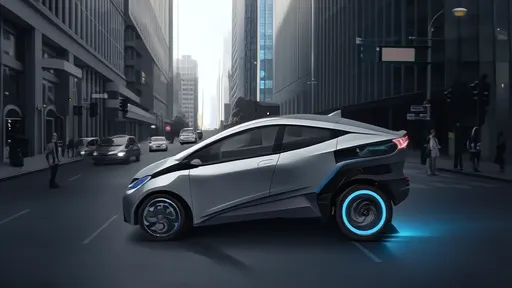
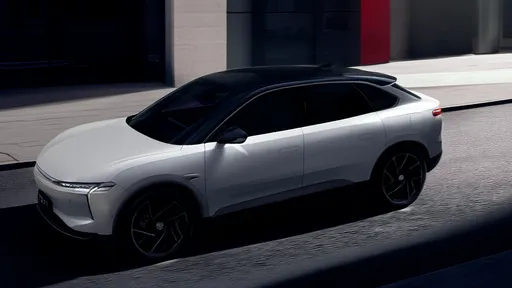
The automotive industry has long been focused on the mechanics of movement—horsepower, torque, and aerodynamics. But as vehicles become increasingly connected and autonomous, a new frontier is emerging: social interaction between cars and their surroundings. This shift has given rise to innovative communication methods, such as light-based signals and projections, which are redefining how vehicles "speak" to pedestrians, cyclists, and other drivers.
For decades, car communication was limited to basic turn signals, brake lights, and the occasional honk. These rudimentary tools were designed for functionality rather than nuance. Today, engineers and designers are exploring how light can convey more complex messages. Imagine a self-driving car approaching a crosswalk: instead of relying on a pedestrian to interpret its intentions, the vehicle could project a clear "walk" or "stop" symbol onto the pavement. This kind of interaction bridges the gap between machine logic and human intuition.
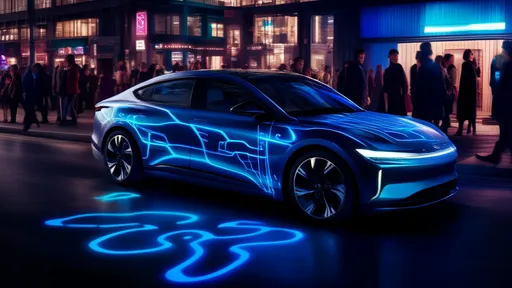
One of the most intriguing developments in this space is the use of dynamic light sequences—what some are calling "car language" or "light language." Audi, for example, has experimented with sweeping light animations that indicate when an autonomous vehicle is yielding or accelerating. These patterns aren’t arbitrary; they’re designed to be universally understandable, much like the symbols on traffic signs. The goal is to create a visual dialect that transcends cultural and linguistic barriers, ensuring clarity in multi-modal urban environments.
Projection technology takes this concept even further. Some prototypes now include high-resolution headlights capable of casting images, text, or even augmented reality markers onto the road. A car might project a virtual bike lane to alert cyclists of its presence or display a countdown timer to show how long until it proceeds through an intersection. These projections aren’t just functional; they’re conversational, transforming the road into a dynamic canvas for real-time communication.
But with these advancements come challenges. How do we standardize these visual cues so they’re instantly recognizable? What happens when multiple vehicles attempt to project conflicting messages in the same space? And crucially, how do we ensure that this flood of light-based information doesn’t overwhelm or distract road users? Regulators and manufacturers are only beginning to grapple with these questions as the technology outpaces existing traffic laws.
Beyond practicality, there’s an emotional dimension to these interactions. A car’s "body language" can influence how comfortable people feel sharing the road with it. Subtle cues—like a friendly pulsing light to acknowledge a pedestrian waiting to cross—can humanize autonomous systems. Researchers have found that people are more likely to trust vehicles that communicate their intentions in ways that feel transparent and considerate. In this sense, light-based communication isn’t just about safety; it’s about building rapport between humans and machines.
The evolution of vehicular communication also raises fascinating questions about urban aesthetics. Cities of the future might feature streets where light dances between vehicles and infrastructure in a carefully choreographed ballet. Some designers envision scenarios where cars project temporary art installations while parked or use light to create immersive narratives about their journeys. While these applications may seem fanciful, they hint at a broader cultural shift in how we perceive mobility—not just as transportation, but as a form of social expression.
As with any emerging technology, adoption will depend on a mix of innovation, regulation, and public acceptance. Early trials in controlled environments have shown promise, but real-world implementation will require careful calibration. One thing is certain: the days of cars as silent, uncommunicative boxes are numbered. The road ahead is bright—literally—with possibilities for richer, more nuanced interactions between vehicles and the people around them.
By /Jun 14, 2025
By /Jun 14, 2025
By /Jun 14, 2025
By /Jun 14, 2025
By /Jun 14, 2025
By /Jun 14, 2025
By /Jun 14, 2025
By /Jun 14, 2025
By /Jun 14, 2025
By /Jun 14, 2025
By /Jun 14, 2025
By /Jun 14, 2025
By /Jun 14, 2025
By /Jun 14, 2025
By /Jun 14, 2025
By /Jun 14, 2025
By /Jun 14, 2025
