The automotive and aerospace industries have long sought solutions to maintain the pristine appearance of high-value surfaces. Among the most promising advancements in recent years is the development of self-healing nanocoatings—a breakthrough that could redefine durability and maintenance standards. These coatings, often just a few micrometers thick, leverage nanotechnology to autonomously repair minor scratches and abrasions, offering a glimpse into the future of material science.
At the heart of this innovation lies a carefully engineered chemical composition. Traditional clear coats, while effective at providing a glossy finish, lack the ability to recover from damage. In contrast, nanocoatings incorporate dynamic molecular structures, such as supramolecular polymers or microcapsules filled with healing agents. When a scratch occurs, these materials respond to environmental triggers like heat, light, or mechanical stress, initiating a repair process at the molecular level. The result is a surface that can "heal" itself, often within minutes or hours, without any human intervention.
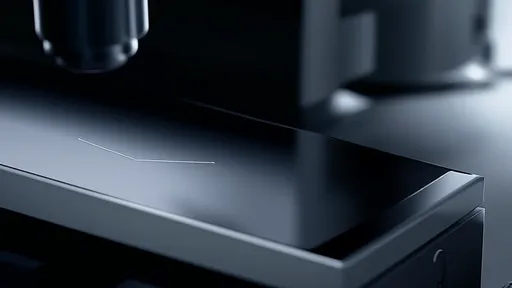
Laboratory experiments have demonstrated remarkable outcomes. In controlled settings, researchers subjected nano-coated panels to standardized scratch tests using precision instruments. Under specific conditions—typically exposure to temperatures between 60°C and 80°C—the coatings exhibited near-complete recovery. Microscopic analysis revealed that the healing mechanism involved the flow of polymer chains across damaged areas, effectively filling microscopic grooves and restoring optical clarity. This behavior was particularly pronounced in coatings containing poly(urea-formaldehyde) microcapsules, which release a healing monomer upon rupture.
Durability testing has further validated the technology's potential. Accelerated weathering trials simulating years of UV exposure and temperature cycling showed that self-healing nanocoatings retained over 90% of their initial healing efficiency. Unlike conventional coatings that degrade through microcrack propagation, these advanced formulations actually mitigate cumulative damage through continuous repair cycles. This characteristic makes them exceptionally suitable for applications where long-term performance is critical, such as aircraft fuselages or luxury vehicle exteriors.
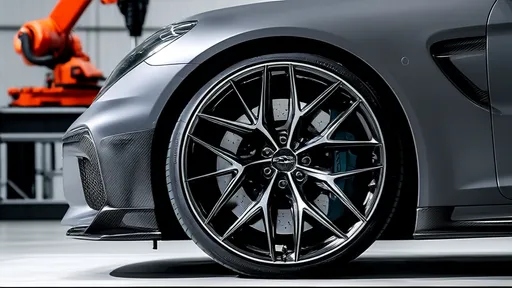
The commercial implications are substantial. While current production costs remain higher than traditional coatings—primarily due to complex synthesis processes—industry analysts project a steep decline as scaling technologies mature. Several European automakers have already introduced limited-production vehicles featuring self-healing clear coats as premium options, with customer feedback highlighting reduced maintenance costs and sustained resale values. The marine industry, too, has taken interest, as saltwater corrosion and abrasive waves present ideal use cases for autonomous repair systems.
Beyond macroscopic scratches, nanocoatings demonstrate unexpected ancillary benefits. Their dense molecular structure inherently resists chemical etching from acid rain or bird droppings, common adversaries of conventional paints. Additionally, the same network dynamics that enable self-repair also improve impact resistance by dissipating energy more efficiently. These properties have spurred research into multifunctional coatings that combine self-healing with anti-icing or conductive capabilities.
Challenges persist in bringing this technology to mass adoption. The healing process currently requires specific thermal conditions—a limitation for outdoor applications in cold climates. Researchers are exploring alternative activation methods, including photothermal nanoparticles that convert sunlight into localized heat. Another hurdle involves achieving consistent healing performance across large, curved surfaces without compromising application thickness or optical quality. Recent advances in spray deposition techniques show promise in addressing this issue.
As material scientists continue to refine formulation chemistry and application methods, self-healing nanocoatings are poised to transition from laboratory curiosity to industrial mainstay. Their development represents not just an incremental improvement in protective coatings, but a fundamental shift in how we conceptualize material longevity. When a car can shrug off supermarket cart dings or an airplane wing heals its own surface imperfections mid-flight, the very definition of "durable" may require revision.
By /Jun 14, 2025

By /Jun 14, 2025
By /Jun 14, 2025
By /Jun 14, 2025

By /Jun 14, 2025

By /Jun 14, 2025
By /Jun 14, 2025

By /Jun 14, 2025

By /Jun 14, 2025

By /Jun 14, 2025
By /Jun 14, 2025

By /Jun 14, 2025

By /Jun 14, 2025

By /Jun 14, 2025
By /Jun 14, 2025
By /Jun 14, 2025

By /Jun 14, 2025
