The automotive industry is undergoing a quiet revolution in in-car entertainment, and Dolby Atmos is at the forefront of this transformation. Once reserved for high-end home theaters and premium cinema experiences, Dolby Atmos is now making its way into vehicles, redefining what it means to enjoy audio on the go. This spatial audio technology isn’t just an upgrade—it’s a complete reimagining of how sound interacts with listeners in a confined, mobile environment.
For decades, car audio systems have relied on traditional surround sound setups, often limited by the physical constraints of vehicle interiors. Dolby Atmos changes the game by introducing a three-dimensional soundscape, where audio objects move freely around the listener rather than being tied to specific channels. This creates an immersive experience that feels remarkably lifelike, whether you’re listening to music, podcasts, or even navigation prompts. Automakers are quickly recognizing the potential of this technology to differentiate their brands in an increasingly competitive market.
What makes Dolby Atmos particularly compelling for automotive applications is its adaptability. Unlike home systems where speaker placement can be optimized for ideal acoustics, car interiors present unique challenges—uneven surfaces, limited installation points, and constant background noise. Dolby’s engineers have developed sophisticated algorithms that account for these variables, dynamically adjusting the sound field based on factors like vehicle speed, road conditions, and even the number of passengers in the car. This intelligent adaptation ensures consistent audio quality regardless of the driving environment.
The implementation of Dolby Atmos in vehicles goes beyond mere entertainment. Several luxury automakers are experimenting with using spatial audio cues to enhance driver awareness. Imagine turn-by-turn navigation where directional instructions seem to come from the actual direction you need to turn, or safety alerts that appear to originate from the location of potential hazards. This multimodal approach to information delivery could significantly reduce cognitive load while driving, potentially improving reaction times and overall safety.
Content availability remains both a challenge and an opportunity for Dolby Atmos in cars. While the number of Atmos-supported music tracks and streaming services grows daily, the automotive sector needs to ensure seamless integration with various content platforms. Some manufacturers are solving this by developing proprietary media systems, while others are partnering with established tech companies to create customized interfaces. The race is on to deliver not just superior hardware, but also an ecosystem that makes accessing Atmos content as intuitive as changing radio stations.
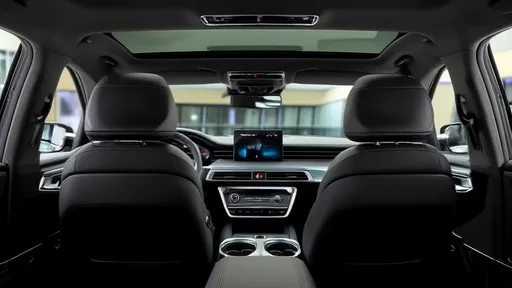
From an engineering perspective, implementing Dolby Atmos in vehicles requires careful consideration of speaker placement and acoustic treatments. High-end models might feature upward-firing speakers in the headliner to create height channels, while more mainstream vehicles could rely on advanced digital signal processing to simulate overhead effects using traditional speaker arrays. The materials used in car interiors—from glass surfaces to seat fabrics—all interact with sound differently, requiring meticulous calibration for each vehicle model. This attention to detail separates successful implementations from mere marketing gimmicks.
The consumer response to in-car Dolby Atmos has been overwhelmingly positive in early adopter markets. Audiophiles appreciate the nuanced soundstage and precise instrument separation, while casual listeners notice the dramatic improvement in clarity and depth compared to conventional systems. Perhaps most surprisingly, many users report that Atmos-equipped vehicles make even compressed streaming audio sound significantly better, thanks to the technology’s ability to reconstruct spatial cues that are typically lost in digital compression.
Looking ahead, the convergence of Dolby Atmos with other emerging automotive technologies presents fascinating possibilities. Electric vehicles, with their quieter cabins and flexible interior designs, provide an ideal canvas for advanced audio systems. Some concept cars already feature speakerless audio systems that use vibrations to turn entire surfaces into speakers—a technology that could work synergistically with Atmos’ object-based approach. Additionally, as autonomous vehicles evolve, their spacious, reconfigurable interiors could transform into mobile Dolby Atmos theaters, complete with seating arrangements optimized for audio immersion.
While currently found mostly in premium segments, industry analysts predict rapid trickle-down of Dolby Atmos technology to mainstream vehicles. The same pattern occurred with previous automotive audio innovations like CD players and Bluetooth connectivity. As production scales up and component costs decrease, what begins as a luxury differentiator often becomes an expected feature within a few model years. Several mass-market brands have already announced plans to introduce Atmos in their upcoming models, signaling this technology’s transition from exclusive to accessible.
The integration of Dolby Atmos into automotive environments represents more than just another premium feature—it’s part of a broader shift toward considering cars as immersive digital spaces. As vehicles become increasingly connected and automated, the quality of in-cabin experiences will play a larger role in consumer purchasing decisions. For discerning listeners who spend significant time in their vehicles, the appeal of concert-hall quality audio during their daily commute may prove irresistible. The road ahead for in-car audio looks—and sounds—more exciting than ever before.

By /Jun 14, 2025
By /Jun 14, 2025
By /Jun 14, 2025
By /Jun 14, 2025
By /Jun 14, 2025

By /Jun 14, 2025

By /Jun 14, 2025

By /Jun 14, 2025

By /Jun 14, 2025
By /Jun 14, 2025

By /Jun 14, 2025

By /Jun 14, 2025
By /Jun 14, 2025
By /Jun 14, 2025
By /Jun 14, 2025

By /Jun 14, 2025
By /Jun 14, 2025
