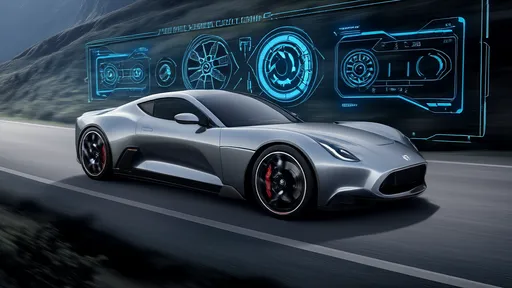
The automotive world is no stranger to innovation, but few advancements have been as transformative as the rise of active anti-roll bars. These sophisticated systems represent a quantum leap in vehicle dynamics, offering a solution to one of driving's oldest challenges: body roll during cornering. Unlike their passive counterparts, active anti-roll bars don't just resist roll—they anticipate and counteract it in real time, creating what feels like a physics-defying driving experience.
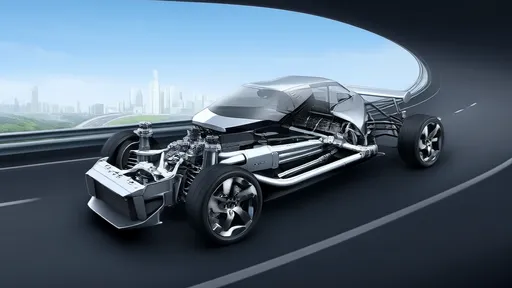
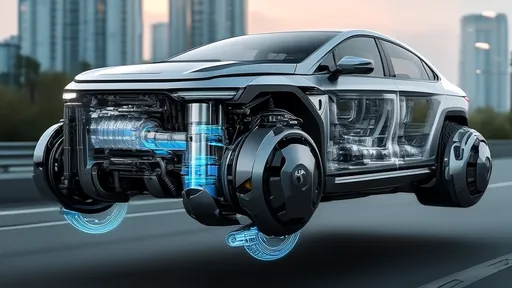
At the heart of this technology lies an elegant marriage of mechanics and electronics. Traditional anti-roll bars work through simple torsion—as one side of the vehicle rises in a turn, the bar twists to transfer force to the opposite side. Active systems take this principle and supercharge it with hydraulic or electric actuators that can vary their resistance instantly. The result? A vehicle that remains remarkably flat through corners without compromising ride comfort on straight roads.
The magic happens through a network of sensors and processors working at lightning speed. Accelerometers measure lateral forces, suspension sensors monitor wheel movement, and steering angle detectors track driver input. This data feeds into an electronic control unit that calculates the perfect amount of counterforce needed millisecond by millisecond. During hard cornering, the system might apply maximum stiffness, while in gentle turns or during straight-line driving, it remains supple for comfort.
What sets active anti-roll bars apart is their ability to adapt not just to driving conditions, but to driving styles. In a luxury sedan, the system might prioritize comfort, allowing slight body movement for a more relaxed feel. That same technology in a sports car would be programmed to virtually eliminate roll, keeping the vehicle perfectly poised during aggressive maneuvers. Some high-end systems even incorporate GPS data, stiffening the bars preemptively when approaching known curves.
The implications for vehicle design are profound. Engineers can now tune suspensions for comfort without sacrificing handling, achieving what was once considered mutually exclusive. This technology has trickled down from motorsports and high-performance exotics to become available in mainstream vehicles. The difference it makes is immediately apparent to anyone behind the wheel—the car feels more planted, more responsive, and paradoxically, both softer over bumps and sharper in turns.
From a safety perspective, active anti-roll bars represent a significant advancement. By maintaining optimal tire contact during evasive maneuvers, they enhance stability control systems' effectiveness. In emergency lane changes or sudden swerves, the reduced body roll keeps the vehicle's weight balanced, giving the driver more control when they need it most. Some systems can even detect when the vehicle is being pushed beyond its limits and adjust accordingly to help prevent rollover situations.
The technology isn't without its complexities. The additional components add weight, and the sophisticated electronics require careful integration with other vehicle systems. Maintenance becomes more specialized as well, with hydraulic systems needing periodic fluid changes and electric actuators requiring diagnostic capabilities beyond traditional suspension components. However, most engineers agree these trade-offs are worthwhile for the performance benefits gained.
Looking ahead, the evolution of active anti-roll systems shows no signs of slowing. The next generation may incorporate predictive algorithms using artificial intelligence, learning individual driving patterns to anticipate needs before they arise. Some prototypes are experimenting with fully active suspension that eliminates the need for traditional anti-roll bars altogether, using precisely controlled actuators at each wheel. As vehicle electrification progresses, these systems will likely become even more responsive, drawing power from high-capacity battery systems rather than engine-driven hydraulics.
For driving enthusiasts, this technology delivers something truly special—the ability to have a car that's both comfortable and capable, without compromise. It's not just about eliminating body roll; it's about creating a more connected, confident driving experience. The road ahead has never looked smoother, nor the corners flatter, thanks to this remarkable fusion of mechanical engineering and electronic intelligence.

By /Jun 14, 2025
By /Jun 14, 2025
By /Jun 14, 2025
By /Jun 14, 2025
By /Jun 14, 2025

By /Jun 14, 2025

By /Jun 14, 2025

By /Jun 14, 2025

By /Jun 14, 2025
By /Jun 14, 2025
By /Jun 14, 2025

By /Jun 14, 2025
By /Jun 14, 2025
By /Jun 14, 2025
By /Jun 14, 2025

By /Jun 14, 2025
By /Jun 14, 2025
