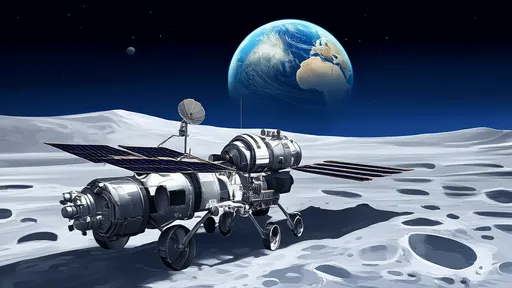
China's Chang'e-7 lunar probe has achieved a groundbreaking milestone by successfully extracting water ice samples from the moon's south pole. This historic accomplishment not only marks a significant leap forward in lunar exploration but also strengthens humanity's understanding of the moon's resources. The mission's success has sparked global interest, as water ice could potentially support future manned missions and even serve as a resource for deep space exploration.
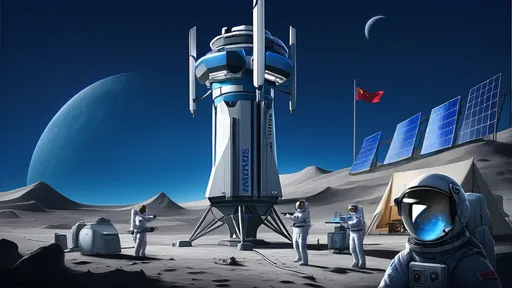
The Chang'e-7 lander touched down in the rugged terrain of the lunar south pole after a meticulously planned descent. This region, known for its permanently shadowed craters, has long been suspected of harboring water ice. Scientists believe these deposits could have accumulated over billions of years, possibly containing clues about the solar system's history. The probe's sophisticated instruments confirmed the presence of water ice before proceeding with the extraction process.
What makes this achievement particularly remarkable is the technological precision required. The lunar south pole presents extreme conditions, with temperatures plummeting to -250°C in some areas. The Chang'e-7 team developed specialized drilling equipment capable of operating in these harsh environments while preserving the integrity of the ice samples. Preliminary analysis suggests the extracted material contains a higher concentration of water than previously estimated, opening new possibilities for lunar resource utilization.
International space agencies have congratulated China on this accomplishment. NASA administrator noted that "the discovery and extraction of lunar water ice represents a game-changer for space exploration." The European Space Agency echoed this sentiment, emphasizing how such findings could facilitate future international collaborations in lunar research. This achievement comes at a time when multiple nations are preparing for sustained lunar presence, making the confirmation of in-situ resources particularly valuable.
The scientific implications of this discovery are profound. Water ice on the moon could potentially be split into hydrogen and oxygen, providing both breathable air and rocket fuel. This would dramatically reduce the cost of lunar missions by minimizing the need to transport these essentials from Earth. Additionally, studying the isotopic composition of lunar water could reveal new insights about how water was delivered to Earth and other terrestrial planets early in the solar system's history.
China's lunar exploration program has demonstrated remarkable progress since its inception. The Chang'e series, named after the Chinese moon goddess, has systematically advanced from orbital missions to soft landings, sample returns, and now resource extraction. This latest success positions China as a leader in lunar exploration and sets the stage for more ambitious missions, including potential crewed landings in the coming decade.
While the immediate focus is on analyzing the retrieved samples, mission planners are already considering follow-up expeditions. Future missions might investigate the distribution and accessibility of water ice across different lunar regions. There's also growing discussion about establishing permanent research stations near resource-rich areas, which could serve as stepping stones for missions to Mars and beyond.
The extraction of lunar water ice represents more than just a scientific achievement—it's a testament to human ingenuity and our enduring fascination with Earth's celestial companion. As nations look to the moon not just as a destination but as a platform for deeper space exploration, discoveries like these reshape our understanding of what's possible. The Chang'e-7 mission has undoubtedly written a new chapter in the story of lunar exploration, one that future generations will look back on as a pivotal moment in space history.

By /Jun 20, 2025
By /Jun 20, 2025
By /Jun 20, 2025
By /Jun 20, 2025

By /Jun 20, 2025

By /Jun 20, 2025
By /Jun 20, 2025
By /Jun 20, 2025

By /Jun 20, 2025

By /Jun 20, 2025

By /Jun 20, 2025

By /Jun 20, 2025

By /Jun 20, 2025

By /Jun 20, 2025

By /Jun 20, 2025

By /Jun 20, 2025
By /Jun 20, 2025
